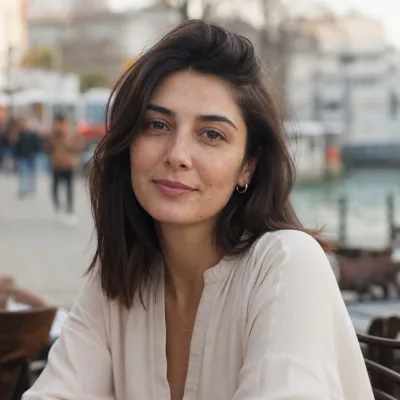
Evelyn Brooks
I trace Istanbul through mosques, mosaics, museum labels and gallery walls, and explain what is worth your time.
I moved to Istanbul in my late twenties after a short reporting trip that was meant to last ten days and turned into a much longer attachment. I had studied the city from afar through architecture, empire and trade, but daily life here changed the scale of everything for me: the ferry crossings between Karaköy and Kadıköy, the call to prayer folding into traffic, the way a Byzantine cistern, an Ottoman külliye and a new gallery opening can sit within the same afternoon. I stayed because Istanbul rewards patient looking. The city never feels finished, and that makes it an honest place to write about culture and history.
For the site, I cover the layers that shape how visitors understand Istanbul beyond a checklist of monuments. I write about major museums such as İstanbul Arkeoloji Müzeleri, the Aya Sofya Tarih ve Deneyim Müzesi, and İstanbul Modern, but I also spend time in places where context is easy to miss: little courtyards in Fatih, church complexes in Fener and Balat, synagogues around Galata, and small artist-run spaces in Beyoğlu. I pay attention to how people actually move through the city, so I include details on Marmaray, ferries from Eminönü and Beşiktaş, the T1 tram, and the uphill walks that can change a day’s pace.
My reporting is built on repeat visits and direct checks rather than copied listings. I confirm opening hours on official museum and venue channels, recheck ticket prices close to publication, and note when security rules, dress expectations or restoration work affect access. For religious sites, I verify prayer-time restrictions and visitor etiquette on the ground whenever possible. When I cite historical claims, I compare museum texts, conservation notes, academic sources and Turkish institutional material instead of relying on one summary. If a guide includes partner links, I say so plainly, and that never changes how I describe value or limitations.
An English-speaking reader benefits from my angle because Istanbul can be overwhelming in ways that are cultural as much as logistical. I try to bridge that gap without flattening the city into easy shorthand. I explain what matters in a mihrab, why a museum room may feel sparse but be historically rich, how to read the difference between restoration and reconstruction, and when a neighborhood is better understood on foot than by taxi. I write for readers who want enough practical clarity to plan a day well, but also enough historical texture to understand where they are standing and why it matters.
Material by this author
2 items
Как пользоваться Istanbulkart в первой поездке
Что реально важно про Istanbulkart, если вы хотите сочетать трамвай, метро и паромы без хаоса.
Istanbul Archaeology Museums
Археологический музей Стамбула — это масштабный комплекс из трех зданий рядом с дворцом Топкапы, где хранится более миллиона античных артефактов. Главная ценность коллекции — саркофаг Александра Македонского и древнейший мирный договор из Кадеша. Сюда стоит идти ради глубокого погружения в историю Ближнего Востока и античности, избегая при этом плотных толп, типичных для соседних достопримечательностей. На вдумчивый осмотр всех залов, включая Изразцовый павильон и Музей Древнего Востока, уйдет около трех часов. Если вы не фанат древних статуй, масштаб экспозиции может показаться утомительным.